From Owner's Head to System: Systemise Your Trade Business
There's a stage almost every growing trade business reaches. The work is coming in, the team is growing, and yet the owner's phone never stops ringing.
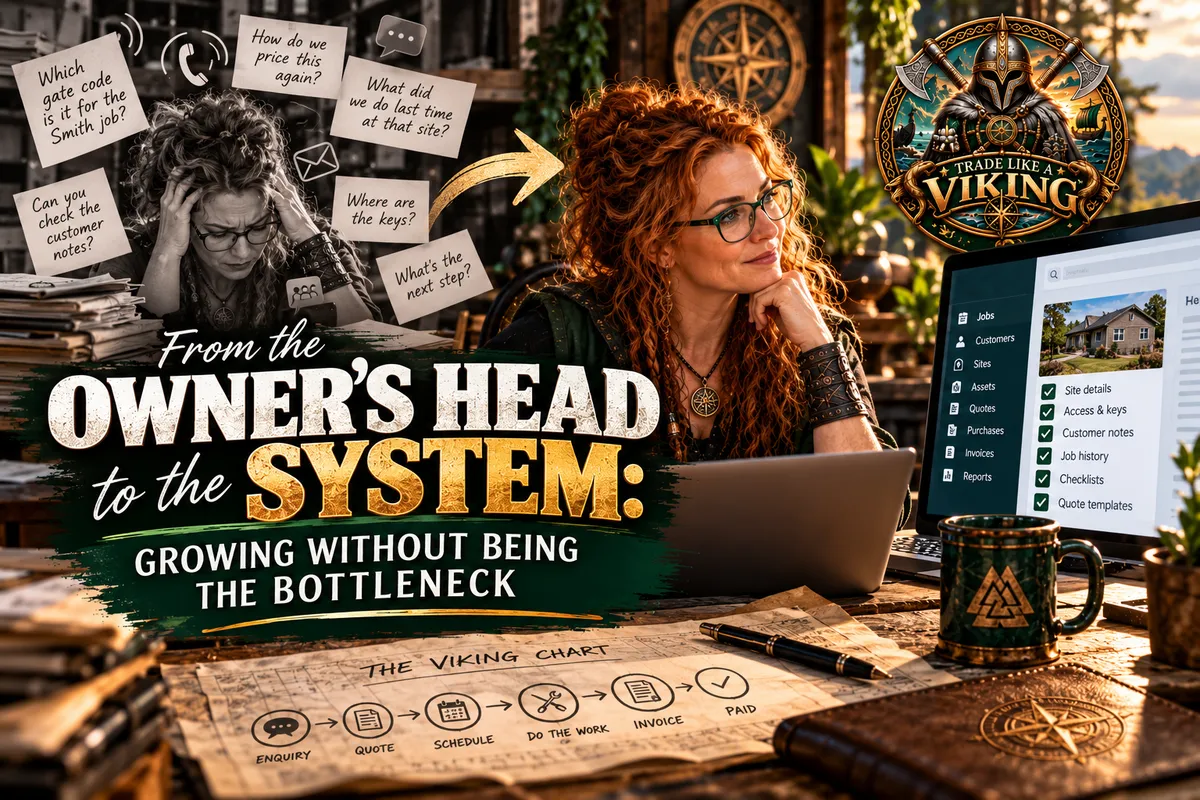
"Which gate code is it for the Smith job?"
"How do we price this again?"
"What did we do last time at that site?"
The answers exist. They just live in one person's head. Simpro's Milan Kumar described it well on the Business Benchmark Group podcast: growth tends to outpace a business's ability to remember what it knows about itself.
When the owner is the system, the business can only grow as far as the owner can stretch. That's the moment to systemise your trade business, and it's easier than it sounds.
What tends to live in people's heads
Site quirks: access, keys, parking, the tricky switchboard
Customer preferences: who to call, how they like updates, what matters most to them
Pricing logic: the rules of thumb behind a quote
"How we do things here": the steps that never got written down
None of this is a failing. It's how small businesses start. But at some point, knowledge needs a home that isn't a person.
Step 1: Map before you systemise
Before changing anything in your software, get the real process out of heads and onto a wall. That's exactly why I created The Viking Chart, a visual way for a team to map how work actually flows from first enquiry to paid invoice, including the workarounds nobody talks about. When everyone can see the whole voyage, the gaps become obvious.
Step 2: Give each piece of knowledge a home
Once it's visible, decide where each piece belongs in your system: site notes, asset records, customer contact preferences, quote templates or job checklists. The question to ask is simple: "If this person were on holiday, where would someone else find this?"
Step 3: Make the right way the easy way
Knowledge captured once but never used fades fast. Build it into the workflow so site notes appear on the job, checklists appear on the device, and templates do the pricing thinking for you.
Step 4: Review it regularly
Businesses change. A short quarterly review of your templates, notes and processes keeps the system reflecting reality.
The payoff
When knowledge lives in the system, new staff get up to speed faster, the owner gets their evenings back, and the business can run and grow without every question routing through one phone.
That's good for today, and it's also what makes a business valuable, sellable and resilient.
Ready to get your processes out of heads and onto the wall? Explore the free tools at erikaentz.com/free-tools, or get in touch to talk about a Viking Chart session for your team.
Erika Entz
